
Asbestosis: Symptoms, Causes, and Exposure History
Asbestosis is a chronic lung disease associated with breathing asbestos fibers.
Plain-English asbestosis education
Asbestosis is a chronic lung disease associated with breathing asbestos fibers, usually after repeated or significant exposure over time. It is different from mesothelioma, but both are asbestos-related diseases.
This page explains what asbestosis is, how asbestos fibers can affect lung tissue, and why symptoms may not appear until many years after exposure.
What is asbestosis?
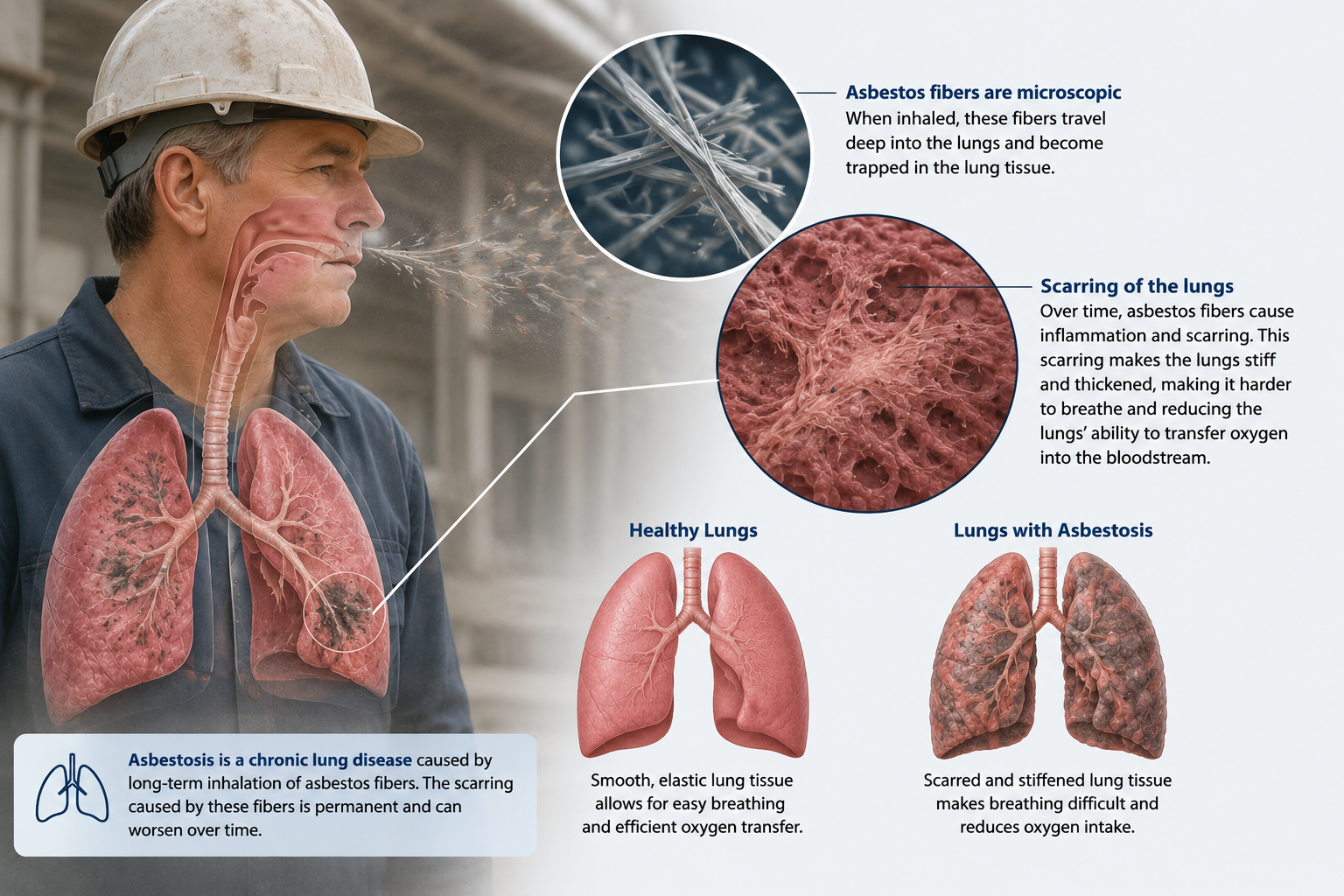
Asbestosis is a long-term lung disease caused by inhaling asbestos fibers. When asbestos-containing materials are disturbed, damaged, cut, sanded, removed, or demolished, microscopic fibers can become airborne. If those fibers are breathed in, some may travel deep into the lungs and become trapped in lung tissue.
Over time, trapped asbestos fibers can irritate the lungs and trigger inflammation. The body may respond by forming scar tissue, a process called fibrosis. As this scarring develops, lung tissue can become thicker, stiffer, and less able to expand and contract normally. This can make breathing more difficult and can reduce the lungs’ ability to move oxygen into the bloodstream.
Asbestosis is generally associated with repeated, long-term, or higher-level asbestos exposure. Historically, this could occur in jobs involving insulation, shipyards, boiler rooms, construction, demolition, power plants, industrial maintenance, asbestos abatement, manufacturing, and other settings where asbestos materials were handled or disturbed.
Symptoms may take many years to appear after exposure. Commonly reported symptoms can include shortness of breath, persistent dry cough, chest tightness, fatigue, reduced exercise tolerance, and in some cases clubbing of the fingertips. These symptoms can also be caused by other medical conditions, so professional medical evaluation is important.
How asbestos fibers affect the lungs
Asbestos fibers are microscopic and can be inhaled when disturbed materials create airborne dust. The smallest fibers may reach deep portions of the lungs. Because asbestos fibers are durable and resistant to breakdown, the body may have difficulty clearing them completely.
As lung tissue reacts to the fibers, scarring can gradually develop. This scarring may progress slowly and may not be obvious at first. In more advanced cases, lung stiffness can make breathing harder, especially during physical activity.
Related educational topics
Reminder: This content is for general education only. MesotheliomaClaims.us is not a law firm, does not provide legal advice, and does not provide medical advice.